-
Lee A. Chilcote, Class of 1964, Thayer Class of 1965. Oral history interview documenting his entrance into the Marine Corps; Officer Training School at Quantico, Virginia, in 1965; deployment to Vietnam from 1966-1967 and participation in various operations (notably: Operation Georgia and Operation Hastings); involvement afterwards in the Greek Cypriot War; and return to the United States. Chilcote describes his experience at Da Nang Air Base in An Hoa, Vietnam, and on the Ho Chi Minh trail.
-
Oral history interview with R. Scott Cheyne, class of 1966. Cheyne describes his childhood in Massachusetts. He discusses his time studying at Dartmouth and offers details about the social life on campus. He shares his experience of military training and attending the Officer Candidate School. He recounts his arrival in Vietnam and the adjustments made during the bombing halt in 1968, along with his daily duties during service. He concludes by describing his return from Vietnam, reassignment to Rhode Island, and the subsequent course of his career in public affairs.
-
Oral history interview with John Calhoun, class of 1966, who discusses his early life in Rochester, New York. He describes his experience at Dartmouth and his involvement in ROTC. Calhoun relates his time at Stanford Business School and later talks about the training and social dynamics in the military. He highlights his experiences from arriving in Vietnam and his progression in rank from Fire Direction Officer to Executive Officer, responsible for receiving commands from the fire directions crew and relaying them to the gun operators. Lastly, he discusses his return home.
-
Dr. Donald C. Bross. Class of 1964. Oral history interview for the Dartmouth Vietnam Project. Bross discusses growing up in Denver, Colorado. He describes his relationship with his mother, a women he describes as ahead of her time. He explains how he became involved with the military and his participation in the Reserve Officers’ Training Corps (ROTC) in high school and later at Dartmouth. He describes his relationship with his uncle Jim and shares stories of Jim’s career in the military. He explains how he knew from an early age that if he wanted to go to college he would have to work hard and find a way to get there on his own, therefore his involvement in ROTC. He describes his time spent in high school working, studying, and participating in the chess club, school senate, becoming an Eagle Scout, and other activities. Bross describes his experience in the Boy Scouts of America and shares stories about his scout leader. Bross describes how he discovered Dartmouth and how 14 other men from Denver also attended Dartmouth during his time. He describes living in Russell Sage Hall, at the time known as Bear Farm or Yellowstone the Second. He discusses the frat system, and socio-economic differences on campus. Bross discusses his summer spent with the Navy ROTC in Florida and his experience flying. Bross describes his experience as a student abroad in Peru. He explains that his time in Peru, growing up in Colorado, career as a Dartmouth student, participation in President Kennedy’s People to People Student Ambassador Program Alliance for Progress in Latin America, and military experience at a young age all contributed to his unique perspective as an enlisted officer. He discusses his first assignment in the Navy, and his experience on a Swift boat in Vietnam. He describes the experience of losing his friend William B. Nickerson, Class of 1964, who died in Vietnam. Bross describes the importance of water transport as it relates to the economy and the Navy. He discusses his experience in graduate school and his career in family psychiatry and child abuse. He shares stories about his mentors from college and his career, in particular, Henry C. Kempe.
-
Timothy H. Brooks. Class of 1964. Oral history interview for the Dartmouth Vietnam Project. Brooks describes growing up in Hampton, New Hampshire. He describes his older brothers and the death of his father when he was eleven. Brooks discusses his high school career, being valedictorian, and how he discovered Dartmouth. He describes his experience in the Army Reserve Officers’ Training Corps. He discusses his time at Dartmouth as an Economics major and working in the dining hall. Brooks discusses his participation in the radio station as the Record Librarian and the Administrative Director on the governing board. He credits the experience as launching his later career in television in charge of research. He describes the book he wrote on the history of WDCR, the Dartmouth College radio station, as well as other books. Brooks discusses being assigned to Fort Bragg in North Carolina, assigned to the 518th Signal Company in the Army. Brooks explains his arrival to Tan Son Nhut Air Base in Saigon, Vietnam and then later assigned to Vinh Long Helicopter Base as Detachment Commander. He shares how he was struck by the heat, then the people, as well as the boredom he experienced while in Vietnam. Brooks shares how he volunteered to be the Pay Officer to be able to get out of Vinh Long once a month. He explains how he connected with Alan R. McKee, Class of 1964, who was the assistant station manager at the armed forces radio station in Saigon. He describes how he did a Sunday morning radio show in Vietnam for a short time. He explains how his company operated the troposcatter, microwave communications.
-
Donald K. Brief, Dartmouth Class of 1954, Dartmouth Medical School Class of 1955, Harvard Medical School Class of 1957. Oral history interview documenting his medical and military service during the Vietnam War. Brief describes his experiences as chief of general surgery at Fort Dix, New Jersey, and at the 24th Evacuation Hospital, Long Binh, Vietnam. He discusses his career and family and the lasting impact of the war.
-
Oral history interview with John Brelsford, class of 1972. Brelsford describes his early childhood and adolescence, discusses his arrival at Dartmouth and the challenges of adjusting to academic life. He talks about joining Students for a Democratic Society (SDS) and participation in the protests against William Shockley as well as the growing anti-ROTC sentiment at Dartmouth. He discusses SDS demands that led to the Parkhurst Takeover and the planning and staging of the takeover, along with public opinion. Brelsford describes his removal from Parkhurst and subsequent sentencing, followed by details about his time spent in prison. He discusses the year after Dartmouth and his decision to drop out, as well as his jobs and education afterward. Brelsford concludes by discussing his family life and current pastimes.
-
Professor Colin C. Blaydon. Oral history interview for the Dartmouth Vietnam Project. Professor Blaydon describes growing up in Newport News, Virginia as the son of a Naval architect and engineer. Blaydon discusses his school experience, race relations, and segregation in Virginia during his childhood. Blaydon describes attending the United States Military Academy at West Point. He shares that West Point was a difficult experience and was able to transfer to University of Virginia as a member of the Reserve Officers’ Training Corps (ROTC). Blaydon discusses being commissioned in the Army Corps of Engineers after graduation, however, he attended Harvard University for graduate school and did not go into active duty until 1966 after he completed graduate school. He shares his experience at Harvard studying modern control theory and later received his PhD in applied mathematics. He was commissioned by the Atomic Energy Commission for a nuclear technology fellowship. Blaydon shares how he was able to use his PhD work while on active duty. He describes meeting Alain C. Enthoven after a class at Harvard and as a result of their conversation, Blaydon describes how he was assigned to Secretary of Defense, Robert S. McNamara’s staff. He details his involvement with Army intelligence during the Vietnam War; specifically, his work with drone technology. He describes being sent to the strategic target operations center at Offutt Air Force Base in Nebraska. Professor Blaydon describes working in academia his time with the Department of Defense. He worked at Harvard Business School as an Assistant Professor teaching quantitative analysis and finance. He discusses the climate on campus and the difference between graduate and undergraduate student attitudes towards the Vietnam War. He details the events of the Kent State shootings and Harvard’s decision to suspend classes and remove the ROTC from campus. Blaydon describes his involvement with Vietnamese resettlement in the United States after the war. He discusses his career as the Dean of the Tuck School of Business and describes the Tuck School’s participation in establishing a business school for the Vietnam National University during the 1990s. He describes the reception the Americans received in Vietnam during this time.
-
Boardman, Donald Interview Abstract
1. Early Childhood in Chicago
2. Dartmouth Career and ROTC
3. Training for the Signal Corps
4. Life at Bien Hoa
5. Promotion to Company Commander
6. Maintaining Family Ties
7. Return to the US and Being a Civilian
8. Updates on Fellow Veterans
9. Final Visit to Vietnam
-
Charles G. Billo. Attended Bronxville Schools, Brown University Class of 1964. Billo applied to Navy Office Candidate School, but went to Columbia Business School, Class of 1967, rather than enrolling in OCS. At Columbia Business School, Billo also joined Columbia University’s School of International Affairs [now Columbia University's School of International and Public Affairs]. He discusses changing views towards the war while in graduate school, and then his process of joining the Foreign Service in 1967. Billo was assigned to the CORDS [Civil Operations and Revolutionary Development Support] program, and was trained in Washington, DC. He arrived in Vietnam in 1969 as an economic reporting officer, with joint responsibility to the embassy in Saigon and the deputy for CORDS in IV Corps. He was then transferred to Can Tho in June of 1969, where he surveyed rice usage and consumption, and dealt with US imports of it. After leaving in 1970, at the age of 27, Billo was then reassigned, still in the Foreign Service, to a post in Milan, Italy. He met his wife there, and they were married in June of 1973. He discusses some anecdotes about his time in Saigon, his fears and his reflections on his time. He also discusses the military and government’s handling of the war, and how it has affected (or has not affected) current military conflicts. Billo discusses with frequent emotion his experiences and encounters in Vietnam, and reflects on the larger political theater at the time.
-
Oral history interview with Peter Bien, Dartmouth professor emeritus of English, about his experience as a pacifist and conscientious objector during the Vietnam War era. Bien discusses his early life growing up in New York City and graduating from the boarding school Deerfield Academy. He describes studying literature at Harvard University for two years before transferring to Haverford College, a small school operated by the Religious Society of Friends (Quaker), where he graduated with a music degree in 1952. Bien relates how his exposure at Haverford to Quaker ideals of social justice and pacifism influenced his life post-graduation as he went on to serve developmentally disabled people in the Netherlands before being called back to the U.S. to be drafted in the Korean War. Bien describes how he applied for conscientious objector (CO) status out of religious conviction, which was ultimately granted, allowing him to complete his service working at a hospital in Rochester, New York. Bien discusses his experience as a graduate student at Columbia University, where he ultimately received his PhD in comparative literature in 1961 and subsequently was hired as a professor at Dartmouth College. Bien discusses the political atmosphere on campus and diverse attitudes among faculty and students about the war in Vietnam. He describes how student activism led to the abolition of the ROTC program with faculty support. He also provides an account of the May 1969 occupation of Parkhurst Hall and his support for the students who were arrested. Bien also describes his further involvement in anti-war activity on campus including public demonstrations with other pacifists and members of the local Quaker community.
-
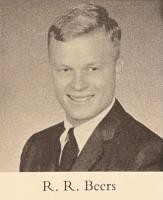
Oral history interview with Rand Beers, class of 1964. Beers discusses his adolescence in a military family, followed by his time at Dartmouth and military training. He describes his Vietnam tour and extension, then talks about transitioning to civilian life and joining the State Department. Beers reflects on how Vietnam impacted later national conflicts, shares experiences from the Second Gulf War, and explains his departure from the Bush Administration to join the Kerry Campaign. He concludes by discussing his time in the Obama Administration.
-
Paul W. Beach, Jr., class of 1967. Oral history interview with Paul Beach about his experience as an anti-war activist and conscientious objector during the Vietnam War era. Beach describes his early life growing up in Philadelphia and Hatboro, Pennsylvania, where he developed an interest in math and science. He learned about Dartmouth through television coverage of Winter Carnival and was impressed with the emphasis on math under President John G. Kemeny, a math professor. Arriving at Dartmouth in the fall of 1963, Beach quickly became involved in activism, joining the Dartmouth Christian Union (DCU) which he describes as a hub of social justice activism on campus. Beach was initially involved in anti-segregation and civil rights activism by protesting Gov. George Wallace’s campus visit in 1963, joining a task force to increase the recruitment of Black Dartmouth students, and leafleting and raising money for causes like the Mississippi Freedom Summer. Beach describes how his critical view of the Vietnam War developed as U.S. military involvement increased over the course of his time at Dartmouth, leading him to embrace radical politics and focus on anti-war activism. After graduating in 1967, Beach stayed in the Hanover area and remained involved in the local chapter of Students for a Democratic Society (SDS) while engaging in activism. He was arrested at a large demonstration at the Pentagon in October 1967, along with Noam Chomsky and Allen Ginsburg. In 1969, Beach was indicted for refusing to appear for induction in the military. He also participated in the takeover of Parkhurst Hall as an alumnus and was sentenced to 30 days in jail. He pled no contest and was sentenced to 3.5 years in prison, initially in maximum security, then minimum security for 20 months. He was released in 1971. Beach describes his struggle to find his way with a felony conviction on his record. He ultimately graduated from Temple University Medical School in 1980 and went on to become a doctor serving underserved populations in Haiti and in inner-city clinics in Philadelphia and New York City.
-
David P. Barton. Class of 1966. Oral history interview for the Dartmouth Vietnam Project. Barton describes growing up in Silver Spring, Maryland. Barton shares that he attended Dartmouth because his brother was a student when he applied. He describes being very interested in sports as a child and continued playing tennis as a student at Dartmouth. He also discusses his involvement in the Dartmouth Christian Union, Delta Upsilon fraternity, Cask and Gauntlet, and the foreign study abroad program in France his junior and senior years. He describes his involvement with anti-Vietnam War activism on campus with events such as film screenings and teach-ins. Barton describes a breakfast he shared with Malcolm X when he was living in Cutter Hall at Dartmouth. Barton discusses his experience as a teaching fellow at Philips Andover Academy and as a graduate student at John Hopkins School of Advanced International Studies. He explains how he became involved with the American Friends Service Committee where he and his wife were sent to Quảng Ngãi Province in Vietnam. Barton describes the relationships he had with the Vietnamese people during the war. He discusses how the CIA was torturing political prisoners near the rehabilitation center where he worked. Barton describes how he was called to testify before Lee [H.] Hamilton’s subcommittee in Congress about what he knew of the torture of the political prisoners in Vietnam. Barton explains his involvement in the House-Senate Joint Inquiry into the 9/11/2001 attacks and his relationship with democracy in the United States and US foreign policy.
-
![[Untitled]](https://dvp.dartmouth.edu/files/medium/4e626d50e7b8f51574251735c94a1c457ac278f9.jpg)
-
![[Untitled]](https://dvp.dartmouth.edu/files/medium/75a666c99710622958fa301e964853328890e292.jpg)
-
![[Untitled]](https://dvp.dartmouth.edu/files/medium/e665f99d6febdc8f1ff981e3975713f53eee3b76.jpg)
-
![[Untitled]](https://dvp.dartmouth.edu/files/medium/39bb742340a6f030e2af83ef5813cf716bcba3ce.jpg)
-
![[Untitled]](https://dvp.dartmouth.edu/files/medium/1d0cb1ff595cb0214b632c0803fb591569218f66.jpg)
-
![[Untitled]](https://dvp.dartmouth.edu/files/medium/27874ff24ccc81fb0cf79d52f3e4631229786b8b.jpg)
-
Hoyt S. Alverson, Professor Emeritus of Anthropology at Dartmouth College. Oral history interview documenting his experience of the anti-war movement at Dartmouth during the Vietnam War. Alverson describes his early life, including undergraduate studies at George Washington University, graduate studies at Yale University, and graduate research in South Africa. He discusses anti-war initiatives at Dartmouth, including the student occupation of Parkhurst Hall in 1969, as well as the back-to-the-land movement.
-
-
-
-